
Spend a Saturday afternoon driving through the Maple Bluff and Middleton areas outside Madison, and you’ll notice something right away: the houses that sell fast look lived-in but polished, like someone actually cared. The ones that sit for weeks usually don’t. The gap isn’t always about price or location. Often it comes down to whether the seller put any thought into how the home presents itself to a buyer walking through for the first time.
So the question every Wisconsin homeowner faces before listing is a practical one: do you invest time and money in home staging, or do you put the house on the market as-is and let buyers use their imaginations?
The answer isn’t one-size-fits-all. Let me walk you through what I’ve seen work, what’s a waste of money, and when skipping staging entirely makes more sense than the real estate magazines want you to believe.
What Is Home Staging and Why Does It Matter in Wisconsin
Sellers tend to think that a clean house is a staged house. Tidy counters, vacuumed floors, maybe a candle burning near the front door. It’s a start, but it’s not staging, and buyers can feel the difference the moment they step inside (sometimes within the first few seconds).
Home staging is the deliberate arrangement of furniture, decor, paint colors, and room flow to help a property sell faster and for more money. A professional home stager isn’t decorating for the seller’s taste; they’re removing personal items, repositioning furniture, and creating a neutral visual story that lets a buyer picture their own life in that space. Throw pillows, fresh paint, and edited furniture aren’t cosmetic fluff. They’re strategic tools.
In Wisconsin, sellers often underestimate this because home prices statewide were up 6.8% year over year in May 2026, with a median sale price of $352,500. People are spending real money, and they’re being selective. In competitive markets from the near-north suburbs of Milwaukee like Wauwatosa and Whitefish Bay to the west side of Madison, buyers touring five or six homes on a Saturday have very quick gut reactions. A property that doesn’t read as cared-for will cause them to move on.
I’ve watched this play out dozens of times. A seller in Waukesha County priced their home well but hadn’t touched the interior since they’d moved in a decade earlier. Dark furniture crammed into a small living room, a primary bedroom with mismatched pieces, kitchens cluttered with small appliances covering every inch of counter. Buyers kept scheduling showings, but offers weren’t coming. Two weekends of simple staging work later, the house went under contract.
After relocating for work, the Trans family, who I worked with this past fall out in Hartland, had been quietly paying two mortgages for almost a year. Their four-bedroom sat on a cul-de-sac with a three-car garage full of tools and seasonal items. We did a weekend of basic staging: cleared the garage to show off that third bay, repositioned the living room furniture to open up the sightlines, and brought in a few neutral accent pieces (that third bay was the real selling point). Within nine days of relisting, the house sold.
How Staging Helps Buyers Visualize and Connect with a Space
People don’t buy square footage. They buy a feeling.
The idea sounds soft, but the data backs it up. According to the National Association of Realtors, 83% of buyers’ agents said staging made it easier for home shoppers to envision a property as their future home. When a buyer walks into a well-staged living room with furniture scaled to the space, a neutral paint palette, and clear traffic flow, their brain starts doing something useful: they start solving the problem of where their couch goes. That shift from visitor to future owner is what drives offers.
An empty room works against you. Bare walls and no furniture actually make spaces feel smaller, not larger. Buyers aren’t architects; they struggle to scale empty rooms in their heads. A strategically placed sectional and a simple area rug do more for a buyer’s spatial understanding than any floor plan printout ever will.
A lot of the inventory around Green Bay, Appleton, and the Fox Cities tends to be older housing stock, cape cods, ranch homes, and split levels from the 1960s through the 1990s. Those floor plans can feel choppy without intentional furniture placement to unify the rooms, which means a few well-placed pieces can do more work than any renovation. Staging can cover layout quirks that would otherwise make buyers hesitant, though sellers who would rather skip the work altogether often call cash home buyers in Appleton instead.
Today’s buyers usually decide whether a home is worth seeing based on the photos they find online. A cluttered dining room, an overcrowded bedroom, or personal belongings throughout the house can make buyers scroll past your listing without scheduling a showing. Staging helps create a clean, inviting space that photographs well and makes a stronger first impression. Since online photos are often the first thing buyers see, presenting your home in the best possible light can attract more interest. However, if you need to sell your house fast in Kenosha, you may not have the time or budget for staging. Selling your home as-is to a cash buyer lets you skip the preparation, avoid the hassle, and move on with a faster, more convenient sale.
How Good Staging Creates Listing Photos That Stop the Scroll
Listing photography is not a nice-to-have. It’s your first showing.
Buyers now tour a median of just 7 homes across a 10 week search, according to the National Association of Realtors, which means most properties get cut on a phone screen before anyone ever smells the fresh paint. Your photos have maybe three seconds to earn a second look. A staged room gives a photographer something to work with: clean lines, proper scale, color contrast, and depth (depth especially reads well in wide-angle shots). An unstaged room gives them clutter, dead space, and furniture that fights the lens.
I keep seeing the same mistake: sellers spend money on a good photographer but don’t stage first. A great camera in a poorly furnished room still produces a poor listing photo. Photographers can adjust light and angle, but they can’t make a loveseat pushed against a wall look like a functional living space. Staging and photography work as a team, not as substitutes for each other.
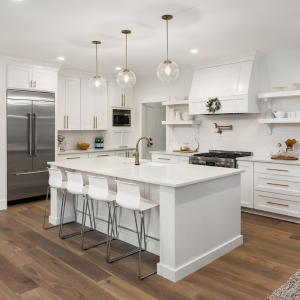
The living room, primary bedroom, and kitchen pull the most weight in listing photos. According to NAR data, the most commonly staged rooms are the living room (91%), primary bedroom (83%), and dining room (69%). A kitchen that looks open and organized, with clear counters and consistent decor accents, photographs completely differently than the same kitchen buried under coffee makers and stacks of mail.
In Wisconsin’s market, where homes are sitting a median of around 50 days before going under contract, getting maximum exposure in week one matters. A property that generates strong online interest and multiple showing requests in its first week has leverage. A property that sits for three or four weeks starts to get a “what’s wrong with it” stigma that no price drop fully fixes, and I’ve watched sellers discount thousands of dollars just to overcome that perception.
What the Stats Say About Home Staging and Return on Investment
A seller in a suburb north of Milwaukee called me last spring. She’d already had her house on the market for six weeks with zero offers. The listing photos were fine, the price was fair, but the interior felt like a time capsule from 2003. She’d skipped staging to save money.
She finally brought in a home stager, spent a moderate amount refreshing the space, and had two competing offers within ten days. The final sale price covered the staging cost multiple times over.
About 30% of real estate professionals report that staging noticeably boosted home values. On a Wisconsin home at the current median price, even a modest lift translates to real money. Sellers who skipped staging and then had to chase the market with a price reduction often spent far more than staging would have cost (sometimes two or three times more).
Nearly half of sellers’ agents, 49%, observed a decrease in the time a staged home spent on the market. Faster sales matter because every month you carry a home in Wisconsin means another mortgage payment, insurance premium, and utility bill. Cutting three to four weeks off your market time has real dollar value beyond any sale price bump, and in my experience, that carrying cost savings alone can justify the staging investment.
The Real Estate Staging Association tracks return on staging investment consistently, and the numbers tend to favor sellers who stage, especially when the property is priced at or above the local median. The math gets less favorable on lower-priced properties where the cost of staging eats a bigger slice of the potential upside.
How to Stage a Home Room by Room
A common objection I hear: “My house is already furnished. I don’t need to rent furniture.” That’s fair, but furnished and staged are two different things. Staging a room you already live in usually means subtracting, not adding.
Living room: Pull furniture away from walls. A sofa floating in a space with a rug beneath it looks intentional, leading buyers to read the room as designed rather than improvised. One anchored to the wall looks like it was pushed there to make room for something else. Clear end tables, remove excess seating, and add one or two simple accent pieces like throw pillows in a neutral or slightly warm tone.
Kitchens: Clear almost all of the counters. Leave one or two items maximum, a coffee maker or a small plant, but that’s it. Buyers need to see counter space. If the cabinet hardware is dated, swapping it costs almost nothing and changes the entire feel.
Primary bedroom: This room should feel like a retreat. Remove personal photos, trophies, and any exercise equipment. Neutral bedding, proper pillow arrangement, two matching nightstands if possible (harder to source than you’d think). A bed with mismatched furniture and a laundry pile in the corner doesn’t pass that test.
Bathrooms: Hospitality-level presentation. Folded towels, a candle or small plant, no personal products on the counter. Clean grout reads as “maintained.” Stained grout reads as “what else is wrong?”
Ask yourself honestly: if you walked into this room as a buyer, would your first reaction be “I could live here” or “I’d need to change a lot”?
DIY Home Staging Vs. Hiring a Professional Stager in Wisconsin
Most articles on this topic skip a detail that shapes the whole decision: how long the home will be on the market affects how much staging actually costs in total.
A professional home stager in Wisconsin typically charges for an initial consultation plus a monthly furniture and decor rental fee. If your house sells in two or three weeks, that rental cost stays low. If you’re on the market for two months, those rental fees stack up and the math shifts. Knowing your local market conditions before committing to full professional staging is part of making a smart call.
DIY staging works well for sellers who already have appropriately scaled, reasonably neutral furniture and are willing to do the editing work themselves: removing personal items, rearranging pieces, deep cleaning, and repainting a room or two. The sellers who struggle with DIY staging are usually too close to their own home to edit it objectively. I’ve seen sellers move a sofa three inches and call it staging, which is more common than you’d think.
A professional home stager brings outside eyes. They see the dated light fixture you stopped noticing three years ago. They understand what photographs well. Around 80% of agents consistently report that staging helps buyers visualize a home, and a trained stager creates that visualization for a broad range of buyers, not just buyers who share your taste.
For vacant properties, professional staging can make a significant difference. Empty homes often feel cold and make it harder for buyers to visualize how the space can be used, which may lead to longer time on the market. Staging helps create a warm, inviting atmosphere that can attract more interest and stronger offers. If you’re looking to avoid the time and expense of staging, we buy houses in Wisconsin in any condition, including vacant properties, so you can sell as-is without preparing your home for showings.
How Much Does It Cost to Stage a Home in Wisconsin
Your costs vary based on whether the home is occupied or vacant, how many rooms need attention, and whether you’re renting furniture or working with what’s already there. For an occupied home where a stager consults and edits your existing furniture, you might spend a few hundred dollars on the consultation alone (sometimes just one walkthrough visit). The median amount spent when using a professional staging service runs around $1,500, compared to about $500 when the agent personally handles the staging. Vacant homes cost more because you’re renting actual furniture, and those costs go up with square footage and the number of rooms you furnish.
For a vacant two-story colonial in a place like Brookfield or Pewaukee, full-room furniture rentals could push your total into the $2,000 to $4,000 range depending on how many rooms you furnish and how long the home is on the market. That sounds like a lot until you weigh it against a price reduction.
The option many sellers don’t consider: a staged consultation only, where a professional stager walks the house with you and gives you a specific to-do list, but you execute the work yourself. That gets you professional guidance at a fraction of the cost. If you’re selling in a market like the Isthmus in Madison or the east side of Milwaukee where buyers are plentiful and savvy, that combination often hits the sweet spot.
If money is tight and staging feels out of reach, there’s another path worth knowing about. At SoPro Real Estate Solutions, we buy homes in Wisconsin directly, as-is, which means you skip the staging cost entirely and still get a fair offer on your property.
When Staging Makes Sense and When It Probably Does Not
Does staging always make financial sense? No, and any honest real estate professional should tell you so.
Staging pays off most clearly when your property is priced at or above the median for your area, when you’re selling during spring or early summer when buyer competition is highest, and when the home is in a neighborhood where buyers have real choices. In Shorewood or the Bay View area of Milwaukee, staged homes compete against other staged homes, which is one reason some owners skip the listing process and sell to cash home buyers in Milwaukee. Not staging in those markets is choosing to look worse by comparison, and buyers notice that gap fast.
Staging makes less sense when the home needs repairs that staging won’t hide. Buyers doing inspections in Wisconsin find deferred maintenance regardless of how nice the living room looks. If the property has real structural or mechanical issues, that money’s better spent on repairs than on throw pillows.
Maria Patel found this out the hard way, selling her home in Menomonee Falls. She’d invested in full professional staging, had beautiful listing photos taken, and was excited about her first weekend of showings. Then a buyer’s inspector flagged the kitchen addition, and she got a contractor estimate that exceeded her entire staging budget. The staging hadn’t been wasted exactly, but it’d put money into presentation when the real obstacle was condition.
If you’re dealing with an urgent sale, an estate property, a divorce settlement, or a home that has been vacant for years, paying for staging, agent commissions, and ongoing holding costs can quickly become expensive. In these situations, selling directly is often the simpler and more cost-effective option. At SoPro Real Estate Solutions, we buy houses for cash, so you can sell your home as-is without making repairs or paying for staging. Call us today to receive a fair, no-obligation cash offer and see how easy selling your home can be.
Frequently Asked Questions
Does a Staged House Sell Better Than an Unstaged One?
Generally, yes, especially in competitive price ranges. About half of real estate professionals surveyed said staged homes tended to sell more quickly than their unstaged counterparts. The results aren’t guaranteed for every property, but staged homes consistently generate more online interest, more showings, and stronger first impressions than identical homes that haven’t been prepared.
What Should You Avoid When Staging a House?
Over-personalizing is the biggest mistake. Family photos, trophies, bold accent walls in niche colors, and furniture that crowds a room all work against you. Buyers need to picture themselves living there, not you. Also avoid staging rooms that buyers won’t see during a showing; spending money on a basement storage room while ignoring a dated primary bathroom is a common misallocation.
Are Wisconsin Home Prices Dropping?
Home prices in Wisconsin were up 6.8% year over year in May 2026, with a statewide median sale price of $352,500, according to the Wisconsin REALTORS Association. Prices are not dropping statewide, though individual markets vary. Tighter inventory in areas like Madison, Milwaukee’s north shore suburbs, and the Fox Valley has kept upward pressure on prices even as sales volume has moderated in some months.
Is Paying for Staging Worth It?
For most sellers listing at or above the Wisconsin median price, yes. The cost of staging typically runs between $1,500 and $4,000 depending on the home and scope of work, and sellers who skipped staging faced price reductions five to twenty times greater than what staging would have cost. Run the math on your specific situation before deciding, and if full staging isn’t feasible, even a consultation-only approach with DIY execution can move the needle.
If you’re weighing your options and not sure whether staging, listing, or selling directly makes the most sense for your situation, we’re happy to talk it through with you. No pressure, no obligation. Reach out to SoPro Real Estate Solutions and let’s figure out what actually works for your home, your timeline, and your finances.
Helpful Wisconsin Blog Posts
- How to Sell a House in Foreclosure in Wisconsin
- How to Avoid a House Foreclosure in Wisconsin
- How to Sell a House Without a Realtor in Wisconsin
- Selling a House During Divorce in Wisconsin
- Who Pays Closing Costs in Wisconsin
- Sell House with Water Damage in Wisconsin
- Should I Stage My House to Sell in Wisconsin
- Can A Seller Back Out Of A Real Estate Contract In Wisconsin?
- How To Sell Your Fire-Damaged House In Wisconsin
- Can You Sell a House with Tenants Living in It in Wisconsin